Po Delta oysters: from the Rosa to the Cuore del Delta
Freely adapted from the report by Renato Malaman
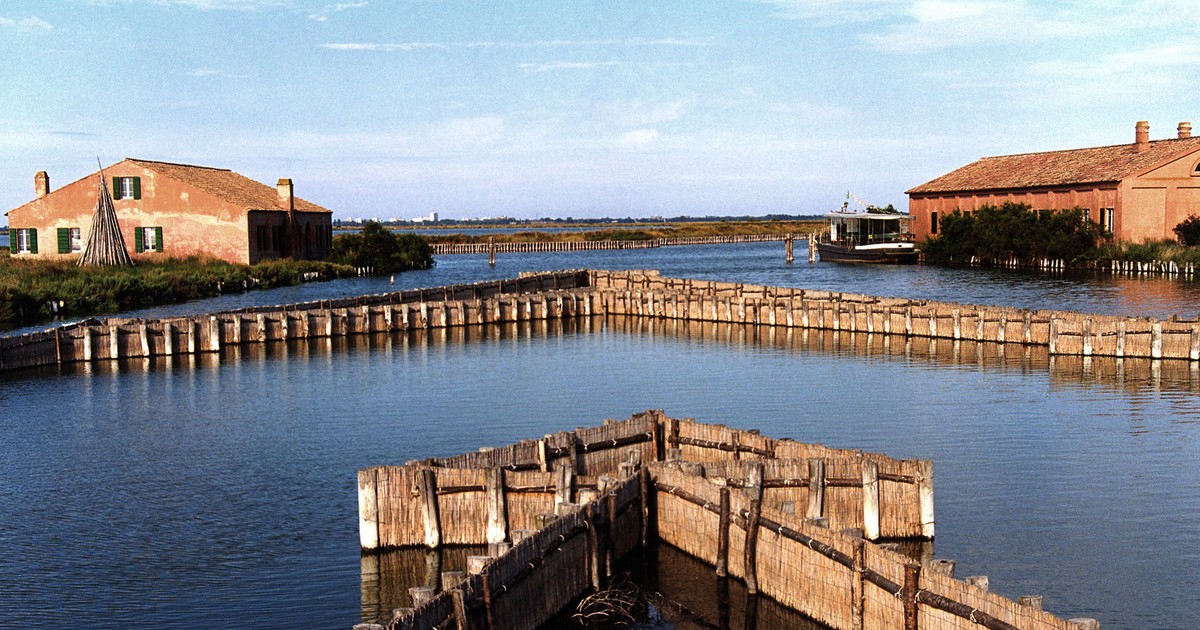
There was a time when, in the Po Delta, shellfish meant clams and mussels. Today another story is growing in the Sacca degli Scardovari: the story of the oyster. Farmers are turning it into a recognisable product, with names of its own and cutting-edge farming methods.
A growing family
The first to make a name for itself was the Rosa oyster, born a few years ago from the work of Alessio Greguoldo. Greguoldo drew on the method of the Frenchman Tarbouriech: the installations can also be managed remotely and adjust to the rhythm of the tides.
Now a new variety is arriving, Il Cuore del Delta, the result of a search for hardier oysters better suited to the lagoon.
Il Cuore del Delta, between poche and Flip Farm
Behind the new brand are Antonio Zerbin and Marcello Passarella, Agricoltori del Mare (sea farmers) close to the Consorzio della Cozza di Scardovari DOP. To farm their oysters they chose two techniques proven above all in New Zealand:
- the poche, bags in which the oysters grow protected;
- the Flip Farm method, with semi-floating containers that are flipped over at regular intervals. This gives the oysters the right exposure to the tide, decisive for their quality, and keeps them safe from the blue crab, the real threat of recent years.
The company was founded in the mid-1980s with clams and over time added mussels and oysters. Oysters have been produced for about ten years, while the Il Cuore del Delta brand has existed for two. It is a bet on diversification: not depending on a single product in a changing lagoon.
Seeing them up close, by boat
The best way to understand all this is to go out by boat and pass alongside the farms. You see how the containers work, how the tides do their job, how the bivalves grow. And then there is the tasting, right on board or in a cavana, with the oyster opened on the spot. Under an October sky over the Sacca, it is an experience that stays with you.
When the oyster becomes tourism
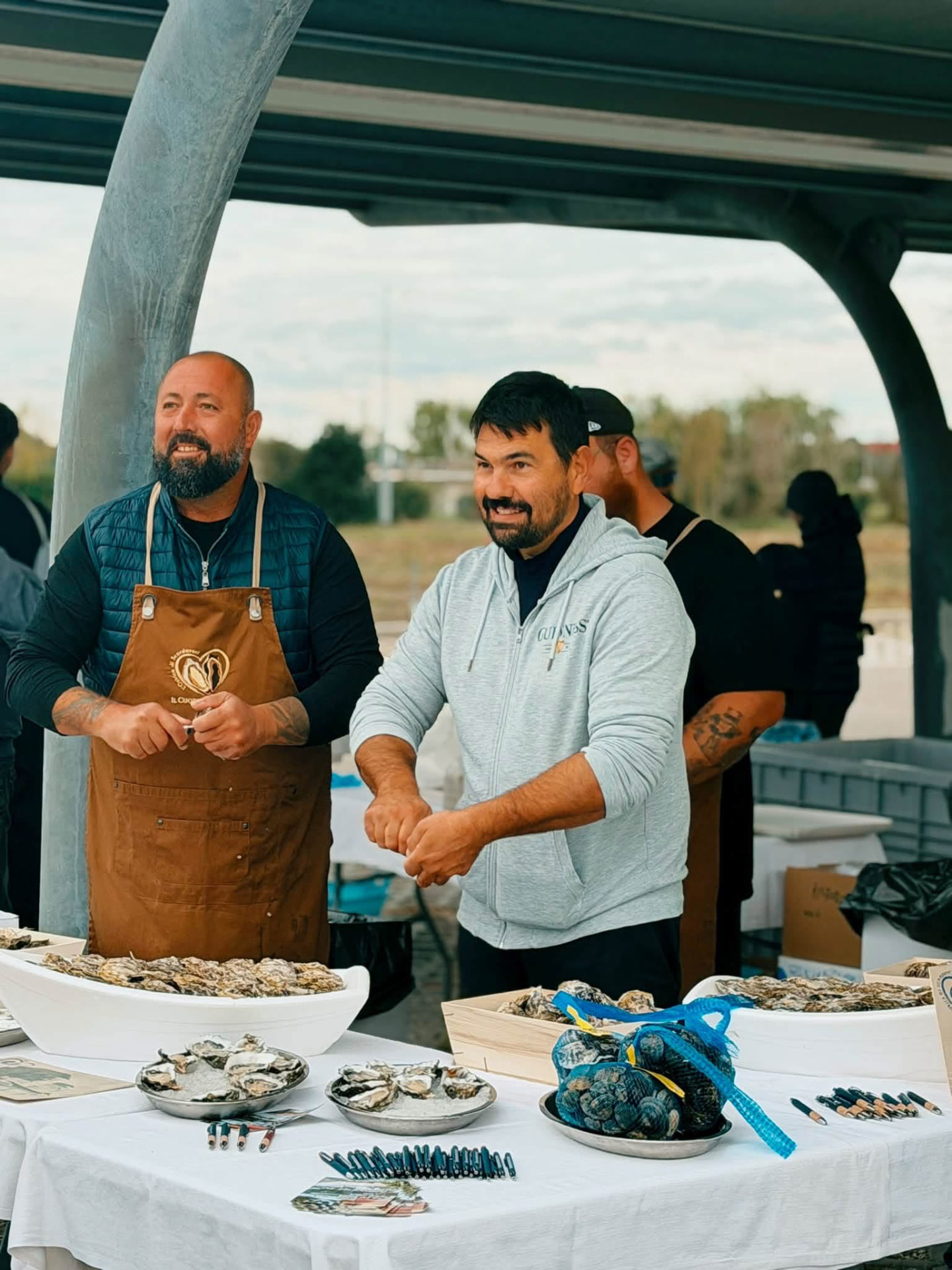
Farming is also turning into an opportunity for fishing tourism. The most recent example is Ostricando, an event sold out well in advance, which brought together hundreds of enthusiasts for rides and tastings.
Sebastiano Bruschi, vice-president of the Consorzio Delta Pool Service and of the Po e il suo Delta consortium, describes a short-supply-chain offer: boat trips, tastings, aperitifs, beach walks, fishing and the restoration of the cavane, the stilt huts of the Scardovari fishermen. The idea is to build a network with the Po Delta Regional Park, hotels and nearby towns, from Comacchio to Rosolina and on to Chioggia.
Innovating after the catch, too
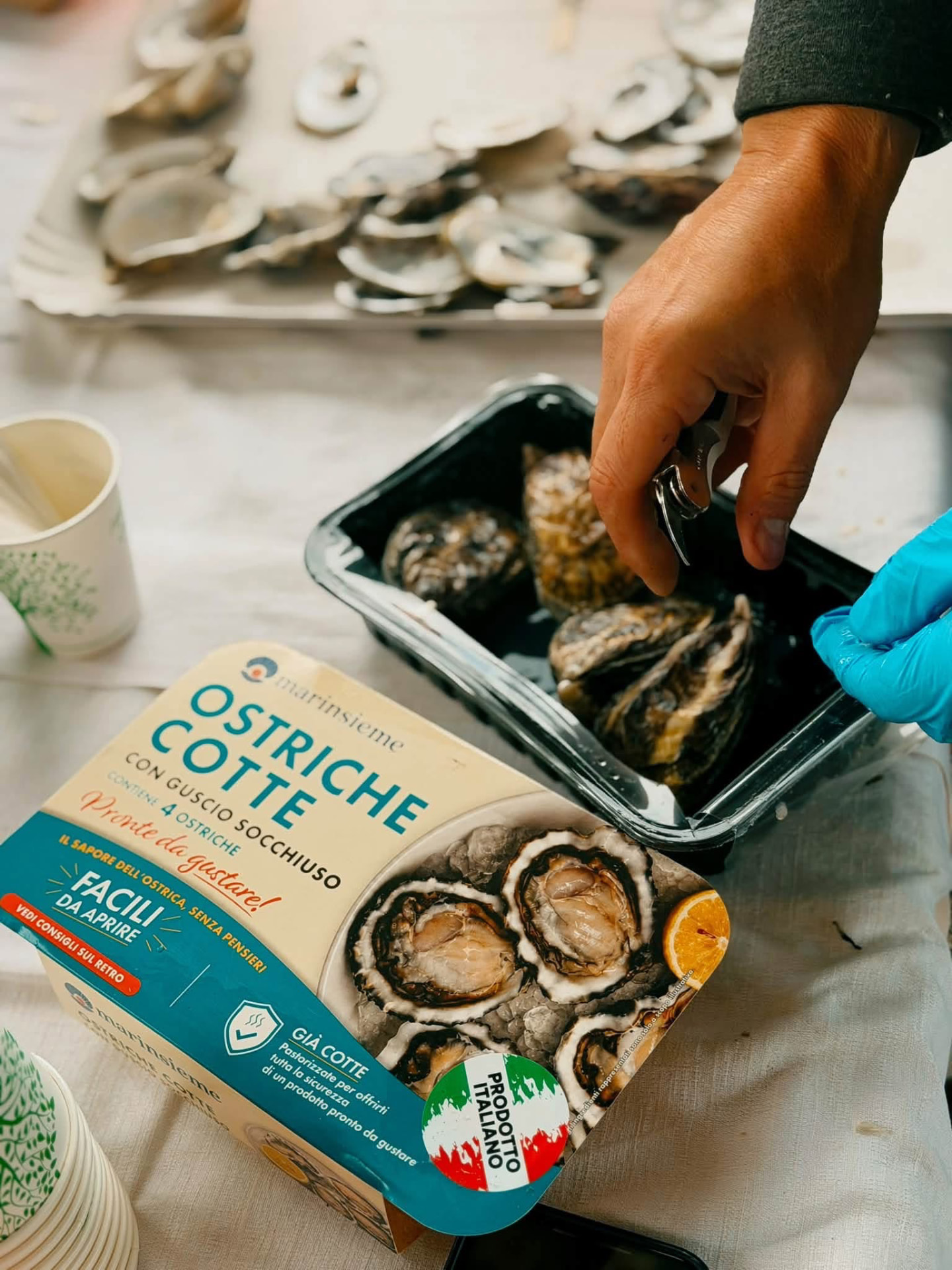
The innovation does not stop at the water's edge. In Rivà, in the Polesine, the company Mancin Nadia had an idea: pasteurising the Scardovari oyster. The oysters are cooked and packed in trays of four, with the shell already half-open, ready for large-scale retail. Easier to eat and safer.
It is a business with old roots. Martino De Agostini started it with traditional marinades of eel and anchovies, and today his children Marco, Michele and Monica carry it on. With the Frescovivo line, shellfish, oysters included, reach the market and restaurants every day in ever more advanced packaging.
A tradition that knows how to change
The Rosa, Il Cuore del Delta, pasteurised oysters: different stories with a common thread. In the Po Delta, innovation happens without cutting the roots. That is how a lagoon of clams and mussels is becoming, in its own right, a land of oysters too.