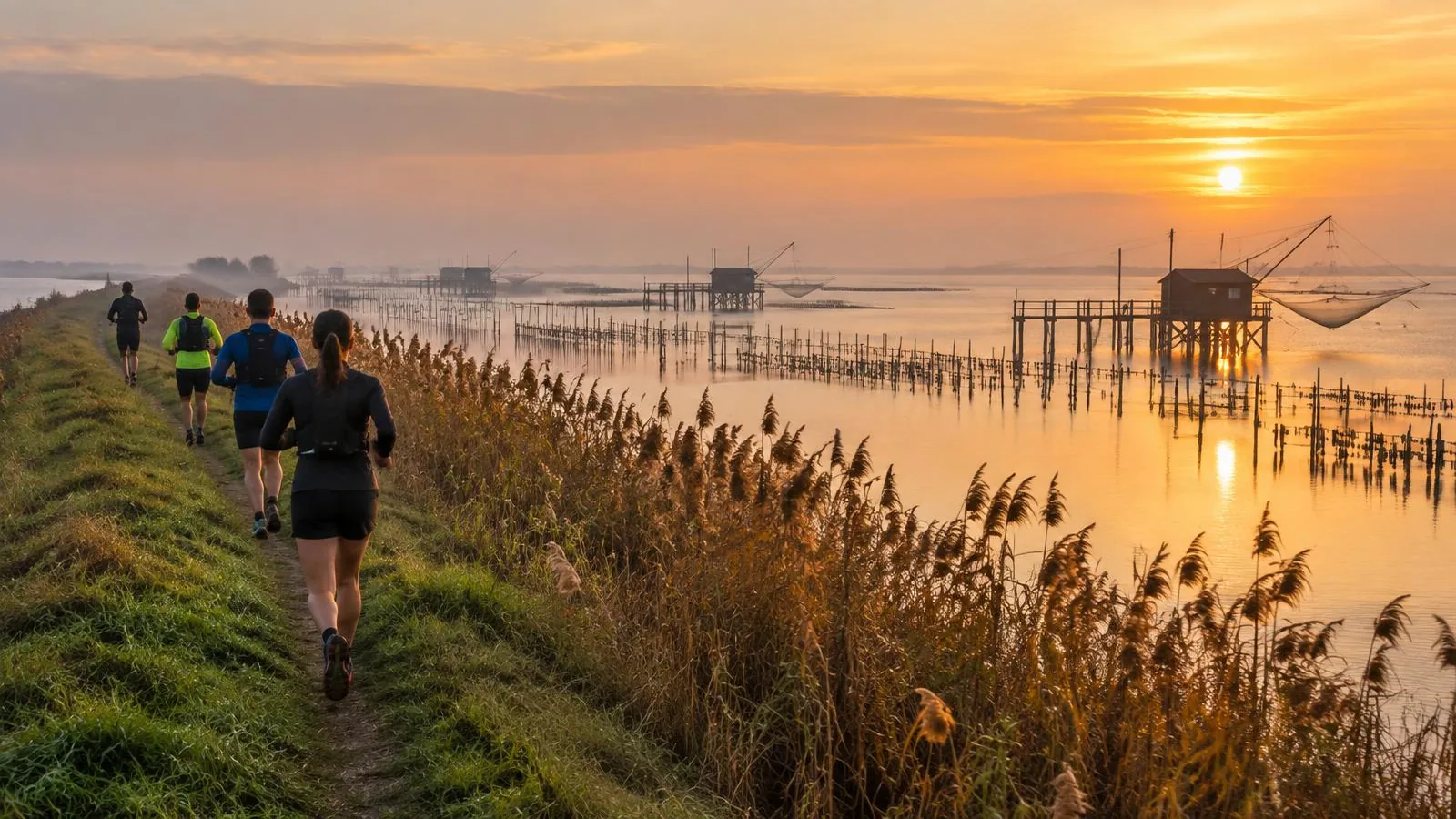
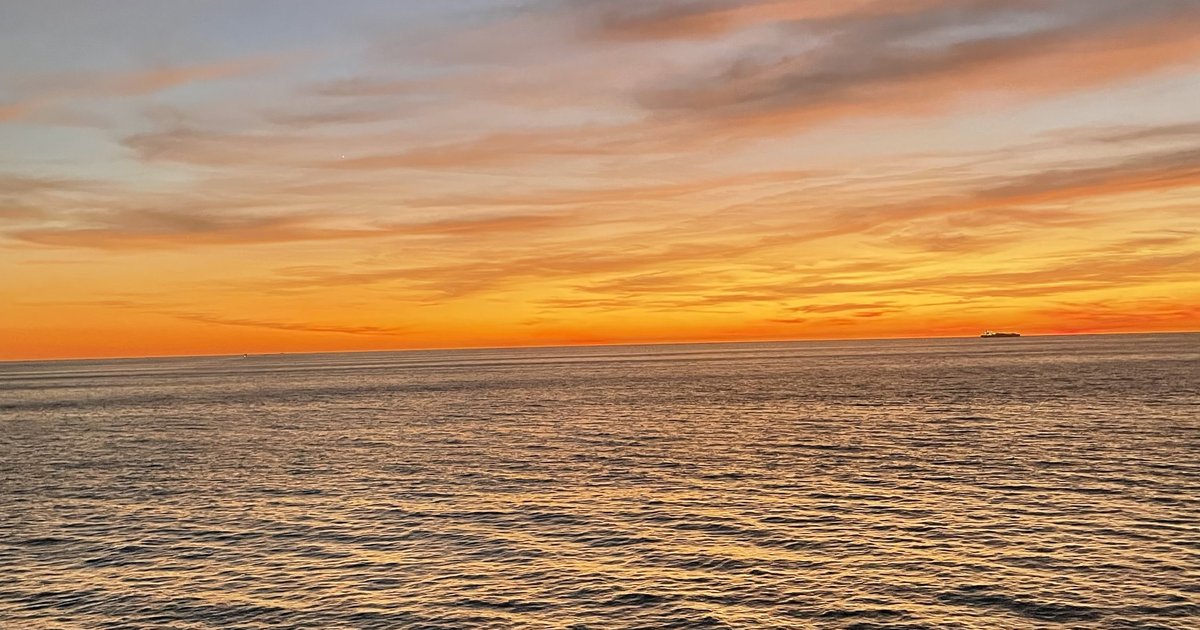
Scano Boa, the Po Delta's last frontier
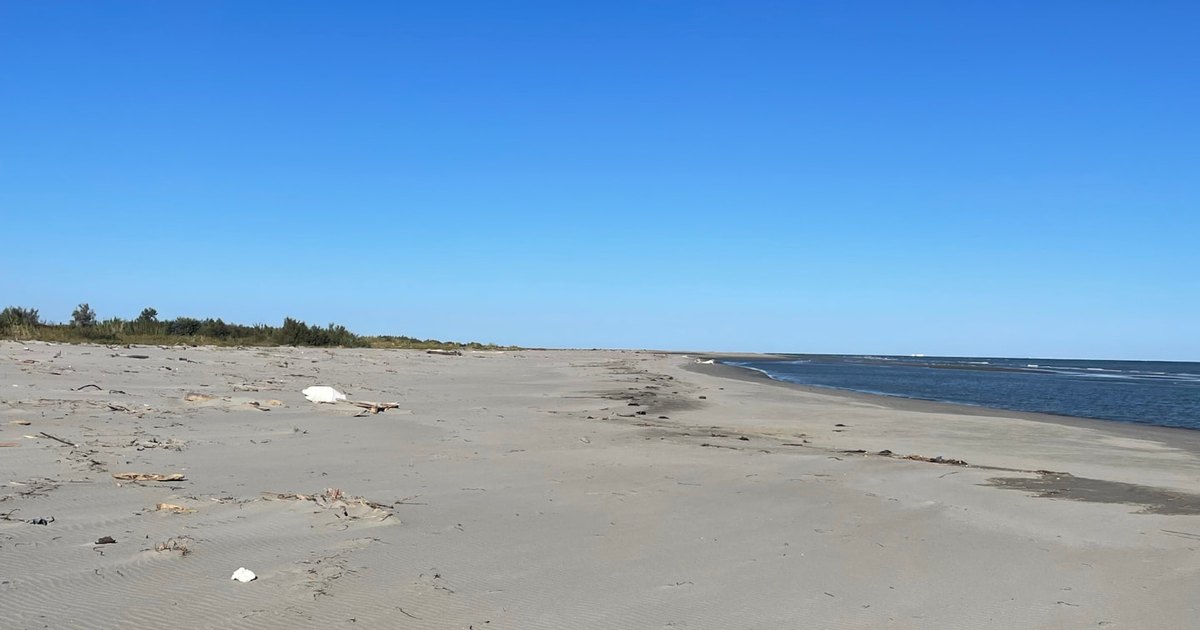
There is a point in the Delta del Po where land ceases to be land. It is called Scano Boa: a long tongue of sand facing the mouth of the Po di Pila, reachable only by boat. No roads, no cars, no noise: just dunes, tamarisks, reed beds and the Adriatic coming straight in from the horizon.
In the local dialect, a scanno is a sandbank built by the river at its mouth from the sediment it carries, often after a flood. It is young land, growing and shifting from year to year. That is why those who know it call it the Delta's last frontier.
A story of sturgeon, fishermen and writers
For centuries, in late spring, sturgeon swam upriver to spawn. They were enormous fish, sometimes weighing hundreds of kilos, prized for their meat and caviar. A single catch could make a family's entire season, and at the river mouths fishermen competed for every metre of water.
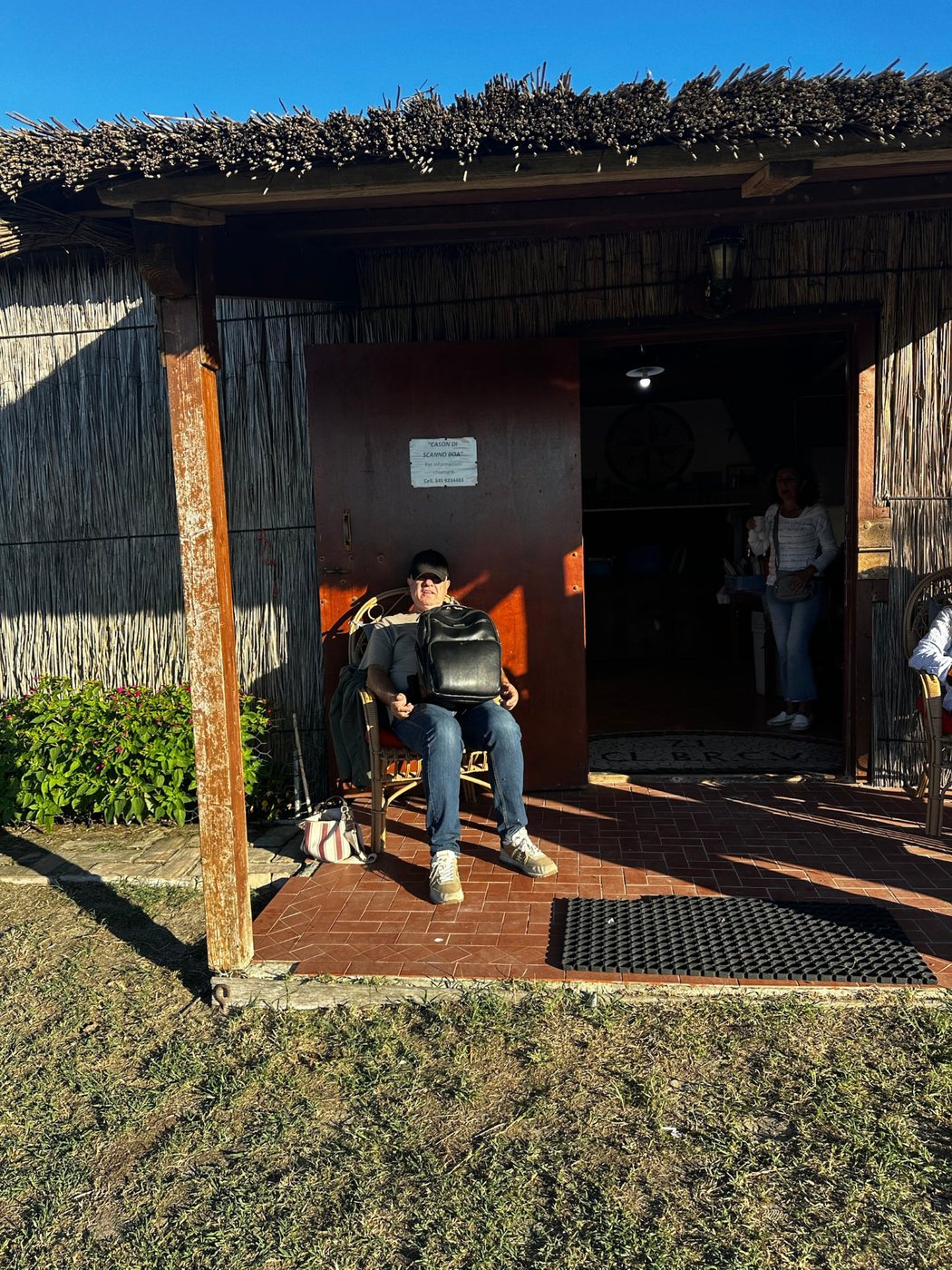
After the Second World War, the fishermen built a cason on the sandbank specifically for sturgeon fishing: reed walls, a reed roof and a brick chimney. When the sturgeon disappeared, they turned to eels, caught in nets until the early 1970s. Many of those men later moved into mussel farming in the Sacca degli Scardovari.
In 1961, the Polesine writer Gian Antonio Cibotto gave this place a literary identity with his novel Scano Boa, a stark story about sturgeon fishermen on the river. That same year Renato Dall'Ara adapted it into the film of the same name, also known as Violence on the River, starring Carla Gravina, José Suárez and Alain Cuny. Cibotto warned readers that there was no point searching a map for the places in the book. Yet he really did come here whenever he wanted to be alone.
The cason has come close to disappearing several times: it burnt down in 1999 and again in 2014, and each time it was rebuilt as it had been. In 2015 it was recognised as a historic site, and since 2016 it has been managed by a committee of retired fishermen who safeguard its memories and traditions. They keep it open, look after it and welcome those arriving from the river.
The journey: from Pila to the sandbank
Scano Boa can only be reached by water, and the journey is already part of the experience. Boats leave from Pila, the easternmost fishing village in the Delta: either aboard the fishermen's boats from their cavane, or on Marino Cacciatori's passenger boats.
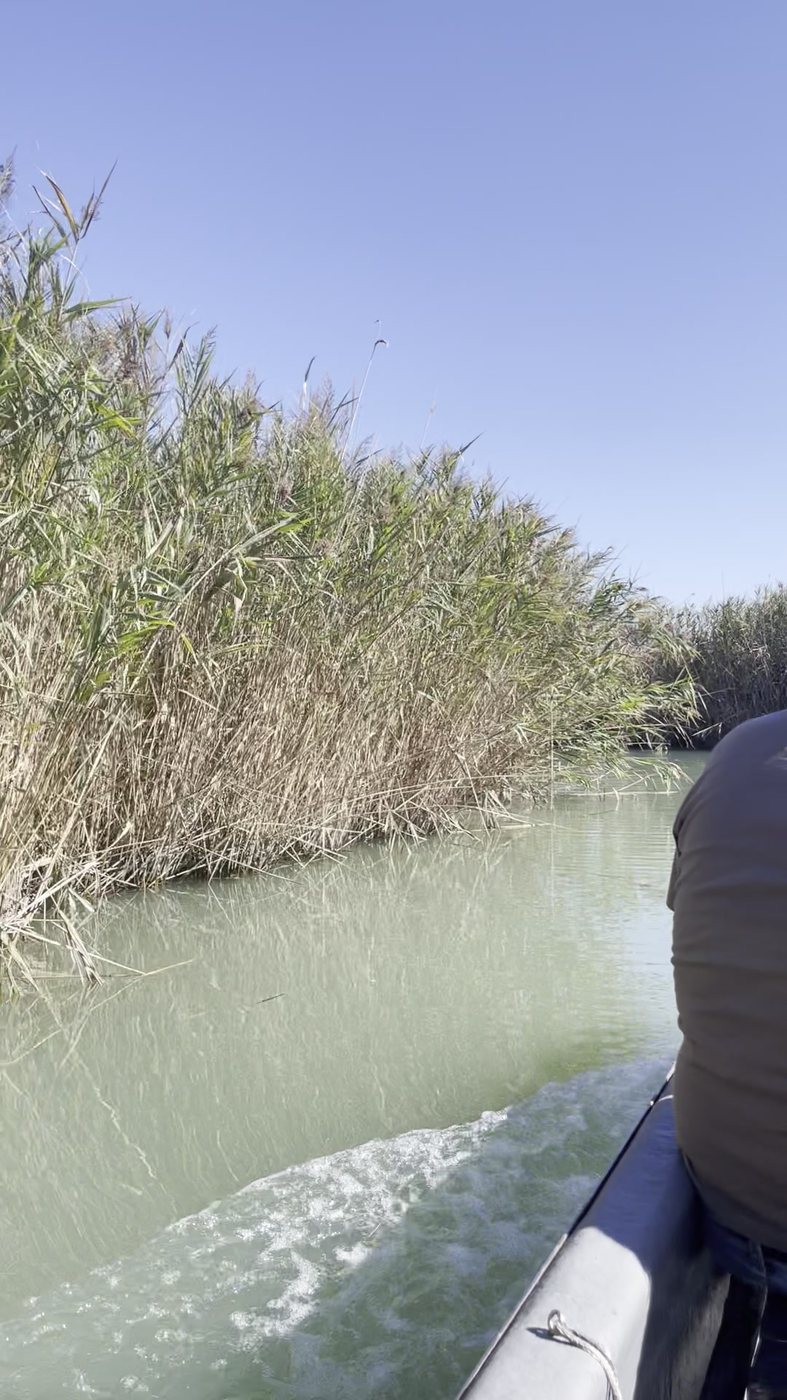
- The Batteria lagoon. You glide through the waters around Isola della Batteria, where the old homes of farmers and fishermen, abandoned because of subsidence, still rise from the water with their roofs showing.
- The Pila lighthouse. About 45 metres high, it stands on an islet at Punta Maistra and is the easternmost masonry building in the Delta. The first lighthouse, built in 1885, was destroyed by retreating German troops; today's structure was rebuilt farther out to sea because, in the meantime, the river had pushed the land forward.
- The paradelli. The paradei are long, narrow channels linking the Po to the brackish lagoons. Here the boat slows, reeds close in on both sides, and herons, egrets and swans appear on the mudflats.
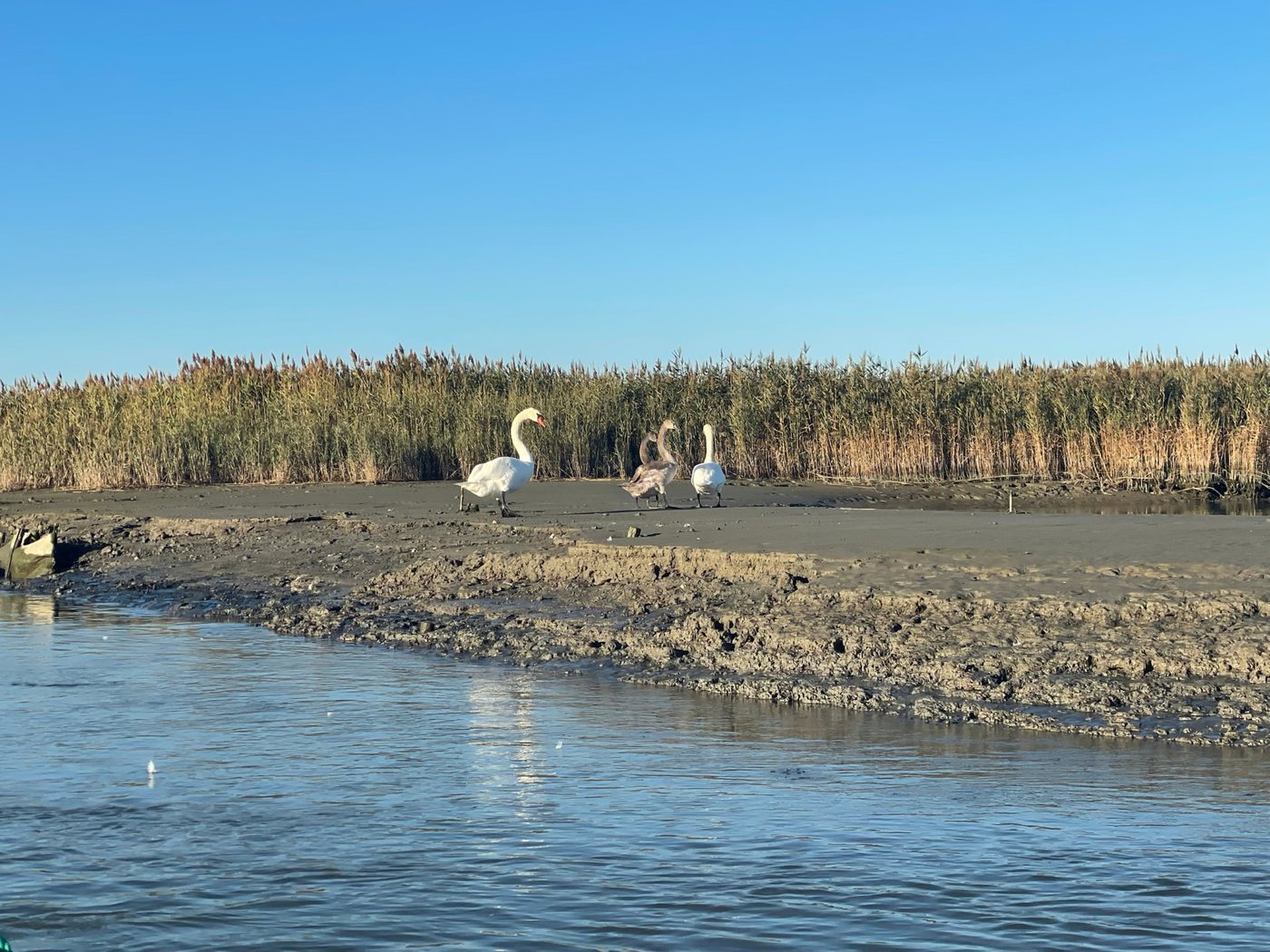
Then the reeds open out, pale sand appears and you step ashore. From there, a path through dunes, tamarisks and junipers leads to the beach facing the open sea.
A day at the fishermen's house
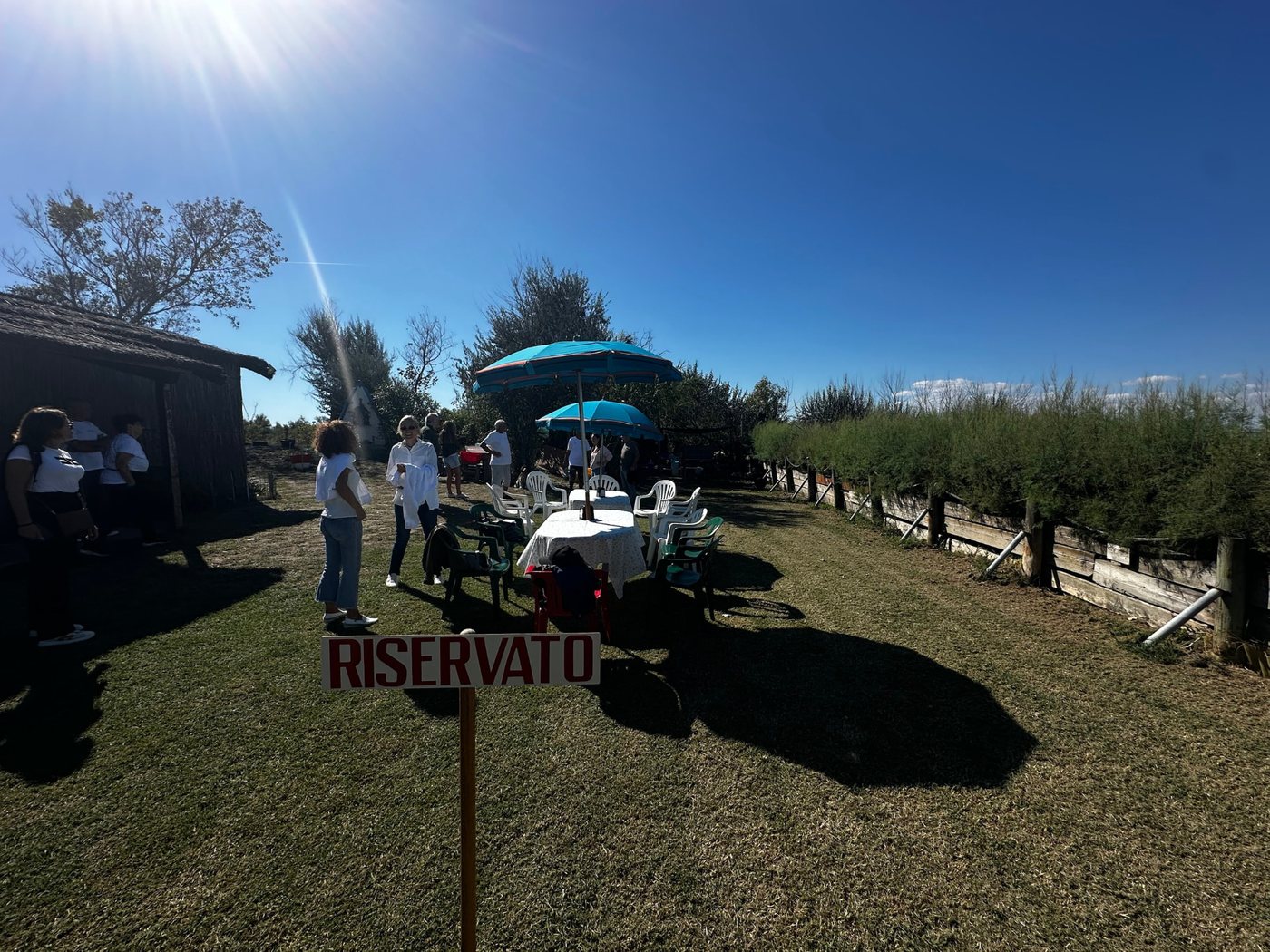
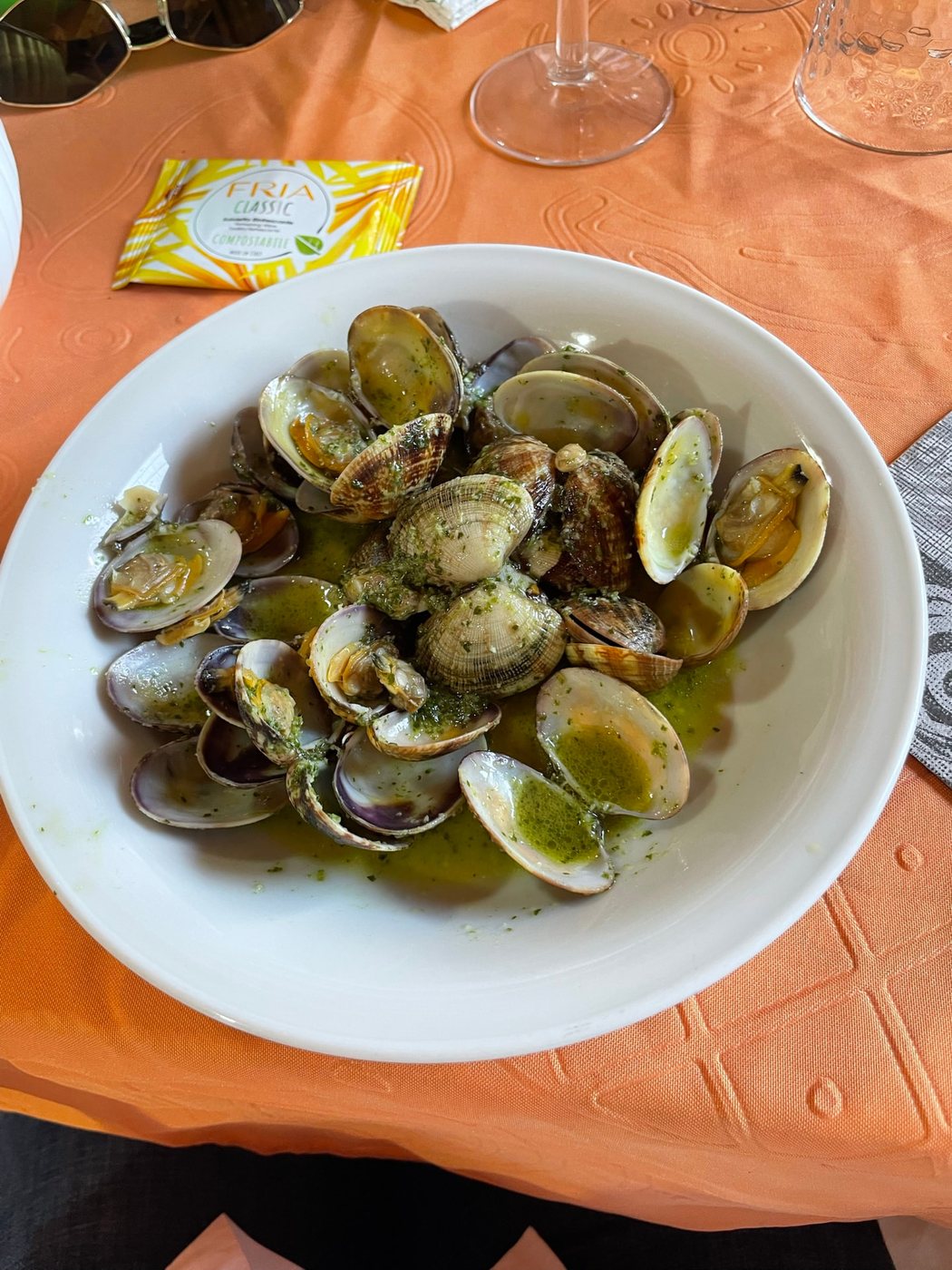
The cason is the heart of the day. Its keepers set the tables outdoors beneath parasols, between reeds and tamarisks: long tables, floral tablecloths and a ‘Reserved’ sign planted in the grass. You eat what the lagoon and sea provide, such as the true clams of the Sacca degli Scardovari, listen to stories from people who genuinely fished here, and feel time slow down.
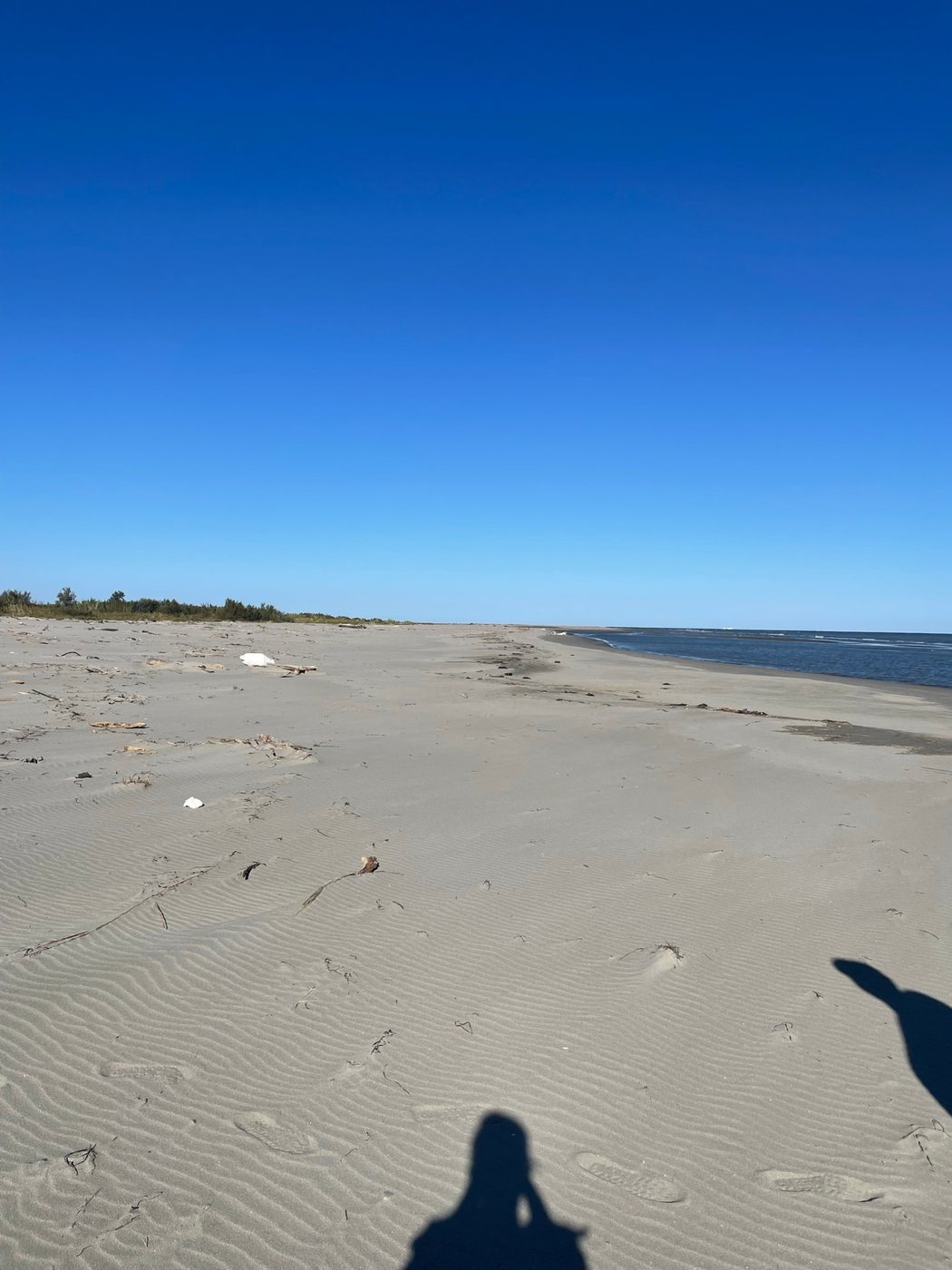
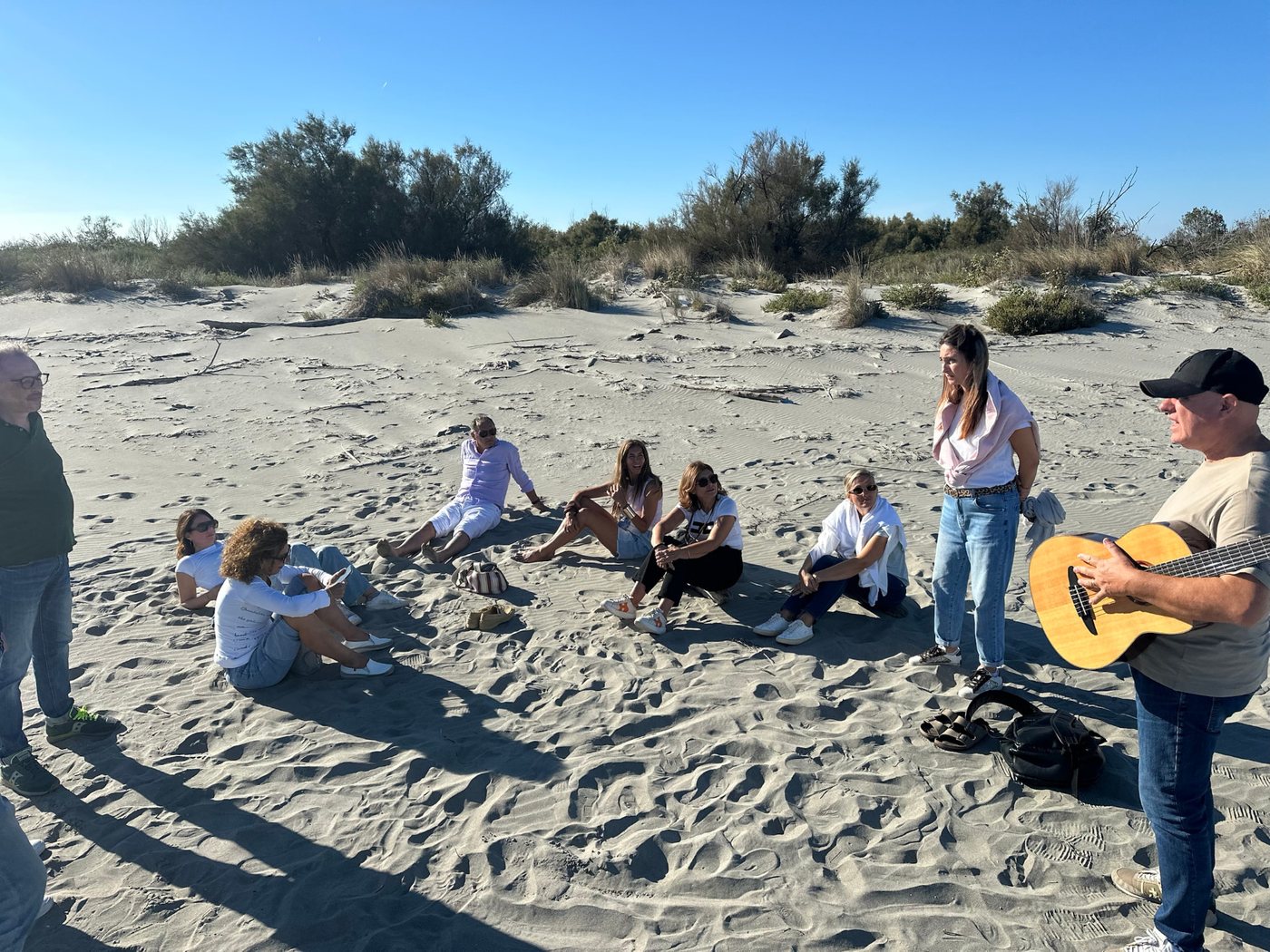
In the afternoon, you walk to the beach: fine sand, driftwood carried down by floods, and not a parasol in sight. Sometimes someone brings out a guitar and the group sits in a circle on the sand until the light turns golden. It is the kind of day no brochure can offer.
How to arrange it from Albergo Italia
Albergo Italia in Porto Tolle makes an ideal starting point: Pila is a 15-minute drive away, and in the evening you can return for dinner at RistòItalia. The hotel does not sell the excursion, but on request it will put you in touch with the fishermen and the association that manages the cason, who arrange the day directly with you.
- Groups of 10 to 15 people: the right size for the boats and the cason's table.
- Departure from Pila, aboard the fishermen's boats or with Marino Cacciatori.
- Route: Batteria lagoon, Pila lighthouse, paradelli, Scano Boa.
- Book ahead: each day is arranged on request and depends on weather and tides.
Write to us or call +39 0426 81006, also on WhatsApp: we will share the contacts and help you combine the excursion with your stay.
From Albarella, Rosolina Mare and the coastal holiday villages
If you are staying on Isola di Albarella, at Rosolina Mare or in one of the holiday villages and campsites along the Delta coast, Scano Boa is the day trip that takes you into genuine wilderness, away from beach clubs and crowds. Pila is less than an hour away by car: leave your vehicle at the harbour and step aboard.
The best plan is a full day: leave Pila in the morning, have lunch at the cason with the fishermen, spend the afternoon on Scano Boa beach and return at sunset. If you would like to stay overnight, Albergo Italia in Porto Tolle is a 15-minute drive from Pila, allowing you to sleep in the heart of the Delta, away from the busier coast.
It is an experience for birdwatchers, nature photographers and anyone drawn to wild beaches and fishing stories, as well as groups of friends or families who want to discover the Delta from the water.
What to know before setting out
- Best time: May to October, when the sea is calm. September and October bring beautiful light and very few visitors.
- What to bring: comfortable shoes for walking on sand, a hat, sun cream and a light jacket for the boat.
- Respect the place: Scano Boa lies within the Delta del Po park. Leave no rubbish, do not pick flowers or plants, and keep your distance from birds nesting on the beach.
Sources
Il Gazzettino — The last custodians of Scano Boa
Italia.it — Scano Boa, the Delta's last frontier
Wikipedia — Scano Boa, the 1961 film
Delta del Po blog — Virtual visit to the Pila lighthouse
Marino Cacciatori — Isola di Scano Boa among lagoons and reeds
Frequently asked questions
- Where is Scano Boa?
- At the mouth of the Po di Pila, in the municipality of Porto Tolle (Rovigo), within the Veneto Regional Park of the Delta del Po. It is the Delta's outermost strip of land towards the Adriatic.
- How do you reach Scano Boa?
- Only by boat. Departures are from Pila aboard fishermen's boats or on excursions run by Marino Cacciatori.
- What is the Cason di Scanno Boa?
- It is a reed fishermen's house built after the war for sturgeon fishing. Burnt down in 1999 and 2014, it was rebuilt and is now cared for by a committee of fishermen.
- Can you have lunch at the cason?
- Yes, by arrangement and for groups of 10 to 15 people. Albergo Italia in Porto Tolle provides the contacts needed to arrange the day.
- Is Scano Boa suitable for visitors staying in Albarella or Rosolina Mare?
- Yes. Pila is less than an hour away by car, and a day at Scano Boa offers a natural alternative to equipped beaches.
- What is the connection with Cibotto and cinema?
- Gian Antonio Cibotto set his novel Scano Boa (1961) here; Renato Dall'Ara adapted it into the film of the same name that year.